Multi-Family Property Management in Rhode Island
Multi-family property management is the running of a building with two or more rental units for its owner, covering each unit's lease and registry duties and the systems and spaces the units share.
Buildings This Covers
Multifamily property management in Rhode Island usually means one of two building types:
Both types mix two kinds of work, which the next section separates.
 Buildings This Covers2
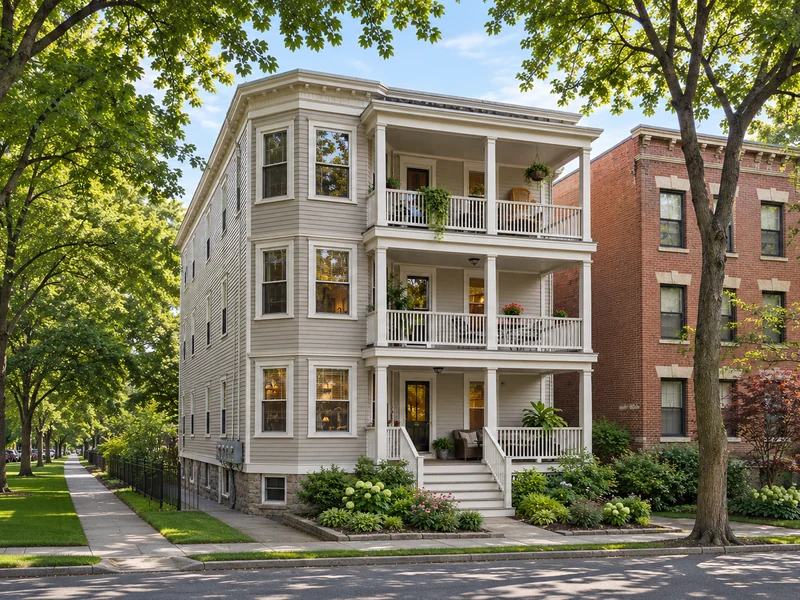
Two- to four-family houses
Houses split into separate units, often with the owner living in one of them.
Small apartment buildings
Buildings with several units, a shared entrance and common areas.
Per-Unit Tasks and Whole-Building Tasks
Splitting the work this way shows an owner what grows with each added unit and what stays with the building.
Some state duties are also counted unit by unit.
Per-Unit Tasks and Whole-Building Tasks5Per-unit: tenants and leases
Screening applicants, preparing leases and renewals, and recording each unit's condition at move-in and move-out.
Per-unit: rent
Collecting several rents each month and following up on any that are late.
Whole-building: shared systems
Heating, hot water, roof and plumbing that serve more than one unit, where one fault can affect several households.
Whole-building: common areas
Hallways, stairs, entrances, laundry rooms and outdoor space, including snow and trash schedules.
Whole-building: utilities
Recording which utilities each tenant pays and which the owner pays.
Rhode Island Duties Counted Per Unit
Rhode Island's residential rental registry is built around dwelling units, so a multi-family owner's paperwork grows with the unit count. As of November 2026:
- Registry
- the landlord registers with the Rhode Island Department of Health, including information identifying each dwelling unit, and re-registers by October 1 each year.R.I. Gen. Laws 34-18-58(a) and (d)
- Lead certificate
- in a building constructed before 1978 that is not exempt from the lead hazard mitigation law, the landlord provides a valid certificate of conformance, or evidence of exemption, for each dwelling unit (34-18-58(b)). Which buildings are exempt is a question for the Department of Health.
- Evictions
- a landlord who is not compliant may not start an eviction for nonpayment of rent.34-18-58(g)
If one unit takes short stays, that unit also carries the short-term rental duties.
How a Multi-Family Building Differs From a House
The differences come from units sharing one building. Four points stand out:
- Leases
- a leased house usually has one lease, while a multi-family building has one per unit, often ending in different months.
- Income
- a vacancy in a leased house stops all of its rent, while one empty unit in a multi-family building stops only part of it.
- Shared systems
- in a building, one heating or water fault can reach several households, so repairs are coordinated across units.
- Shared spaces
- a house can still have grounds, access or association duties, but a multi-family building adds indoor common areas that need a schedule.
An owner with one house can read the single-family page instead.
How to Start
A first call covers the building and how its units are rented today.
- 1Call (401) 293-1050
- 2Share the town, the number of units, the year the building was built, which units are occupied and whether you live on site
- 3Mark each task as per-unit or whole-building, and choose which to hand over
- 4Put the agreed scope in writing before the next lease ends
Multi-Family Property Management Questions
Call (401) 293-1050Is a two-family house a multi-family property?
Yes. Any building with two or more separate rental units counts as multi-family for management purposes, and the RIDOH registry lists each unit.
Can I live in one unit and have the others managed?
Yes. The owner keeps the tasks they want to handle on site and hands over the rest.
Does each unit need its own lead certificate?
For a non-exempt building built before 1978, yes. The statute asks for a certificate of conformance, or evidence of exemption, for each dwelling unit.
Who should I ask about manager licensing?
Ask the manager directly. Rhode Island's real estate licensing law covers renting or leasing for others for a fee (R.I. Gen. Laws 5-20.5-1), so any manager should explain how they meet it.
Sources and Review
Each duty above was read on the official Rhode Island source on November 27, 2026.
General information as of November 2026, not legal or tax advice. Rules change; confirm current requirements with the agency named in each source.

Family First, Wealth Always.
Talk With TLZ Holdings
If you own a two- to four-family house or a small apartment building in Rhode Island, call (401) 293-1050 to talk through its units and shared systems.